

Horizontal Co-Ownership: The Dream of an Individual House Without the Hassle? A Complete Guide to Shared Property Models
Owning a house without the endless headaches of solo responsibility might sound like wishful thinking, but a growing number of homeowners across the UK and Europe are discovering that horizontal co-ownership could be the answer. Rather than shouldering every cost and decision alone, this model allows several people to share a property, splitting expenses, upkeep, and even holiday time. It's a concept gaining traction, especially as affordability pressures push buyers to think creatively about how they access bricks and mortar.
At a glance
- Horizontal co-ownership allows multiple owners to share the costs, maintenance, and usage of a property, making real estate more accessible.
- Unlike vertical co-ownership found in apartment blocks, this model applies to individual houses sharing exterior spaces like gardens or driveways.
- Legal frameworks in countries like the UK and France provide clear documentation to define ownership rights, cost-sharing, and conflict resolution.
- A trustee or managing body is essential for administrative tasks, including managing shared funds, maintenance, and organizing meetings.
- The model typically groups two to eight owners together, often providing each with six to ten weeks of usage per year for holiday homes.
- Financial benefits include lower entry costs and potential rental income, while shared infrastructure can lead to improved energy efficiency.
- Potential challenges include the need for consensus on renovations and navigating complex local building regulations.
Understanding horizontal co-ownership: what makes it different from traditional property models?
At its core, horizontal co-ownership refers to a legal arrangement where a property, typically a house rather than a block of flats, is divided amongst multiple owners who each hold a defined share. Unlike renting or sole ownership, this structure spreads both the financial burden and the perks across everyone involved. In the UK and France, the legal frameworks supporting this type of arrangement have matured considerably, offering clearer protections and defined rights for each co-owner. Contracts typically set out how the property can be used, how costs are divided, and what happens if someone wants to sell their share.
Defining Horizontal Co-Ownership and Its Legal Framework in the UK and France
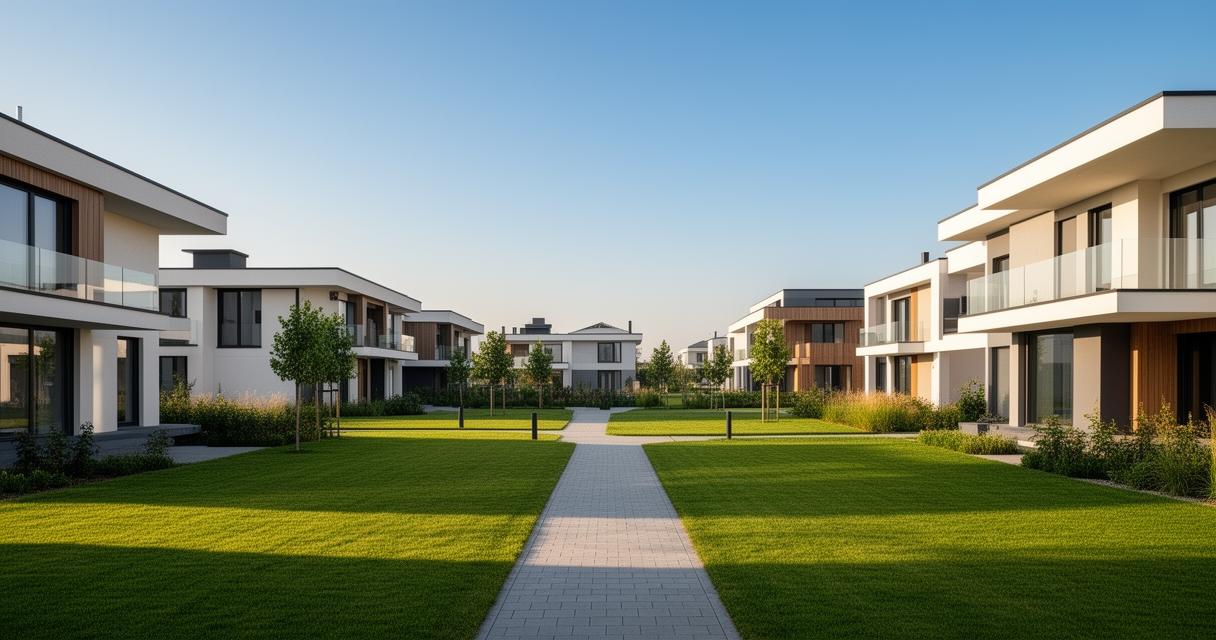
In France particularly, horizontal co-ownership has become a recognised legal structure for houses grouped together, often within a private estate or shared plot of land. This differs from the more familiar apartment block model because each co-owner typically has exclusive use of a specific dwelling while sharing communal areas like gardens, driveways, or leisure facilities. The legal documentation, often drawn up with the help of a notary, spells out the rights and obligations of each party, ensuring disputes are minimised from the outset.

Horizontal versus Vertical Co-Ownership: Key Distinctions and Structural Differences
Vertical co-ownership, the more traditional model most people associate with flats, involves shared structures like staircases, roofs, and lifts within a single building. Horizontal co-ownership, by contrast, applies to individual houses or units spread across a piece of land, with shared amenities existing outside the main dwelling rather than within it. This structural difference has practical implications too, particularly around maintenance responsibilities and how property management companies, such as MYNE, coordinate upkeep across dispersed properties rather than a single tower block.
The Practicalities of Shared Property Management: Responsibilities, Trustees, and Decision-Making
Once the legal groundwork is in place, the real test of horizontal co-ownership lies in the day-to-day running of the property. Someone needs to oversee shared spaces, collect contributions towards maintenance, and mediate when disagreements arise. This is where the role of a trustee, or an equivalent managing body, becomes indispensable.
The Role of the Trustee and Collective Governance in Co-Ownership Arrangements
A trustee, sometimes called a syndic in French law, acts as the administrative backbone of the co-ownership. Their responsibilities include organising annual meetings, managing shared funds, and ensuring that agreed rules are followed. Companies offering managed co-ownership schemes, such as MYNE, take this a step further by handling everything from the initial purchase to ongoing maintenance, giving owners a genuinely hassle-free experience. For those interested in exploring how this works in practice, an upcoming webinar scheduled for the 19th of August at 18:30 GMT, or 19:30 CET, offers a chance to learn directly from industry specialists about how these arrangements function.

Balancing Individual Freedom with Collective Responsibilities: Rules and Management Systems
Naturally, sharing a property with others means compromise. Most schemes group between two and eight co-owners together, each holding a stake and an agreed allocation of usage time, often ranging from six to ten weeks annually for holiday homes. MYNE, for example, places compatible co-owners together deliberately, aiming to ensure fair usage and reduce friction. Owners still retain day-to-day control over their allotted time and can even rent out their share when they're not using it, adding a layer of flexibility that pure ownership rarely offers.
Weighing the Benefits and Challenges: Is Horizontal Co-Ownership Right for You?
Like any property arrangement, horizontal co-ownership comes with its own set of advantages and drawbacks. Understanding both sides helps prospective buyers decide whether this model suits their lifestyle and financial goals.
Advantages of Horizontal Co-Ownership: Energy Efficiency, Shared Spaces, and Suburban Living
One of the most appealing aspects is affordable property access. Purchase and maintenance costs are split across several parties, meaning entry points can be far lower than buying outright. Market value for each share can start from around fifty thousand euros, opening doors to properties in desirable locations such as Spain, Italy, and Croatia that might otherwise feel out of reach. Beyond cost sharing, there's also the benefit of collective spaces, which often means better energy efficiency through shared heating systems or renewable installations, and suburban living arrangements that offer more room to breathe than city-centre flats. Co-owners also stand to benefit from potential property value growth over time, alongside genuine rental income opportunities during periods when they aren't using the home themselves.
Potential drawbacks: renovation needs, local building regulations, and municipal considerations
That said, horizontal co-ownership isn't without complications. Renovation projects can become tricky when multiple parties must agree on scope and cost, and local building regulations, particularly in France, can add layers of bureaucracy that slow down improvements. Municipal considerations also play a role, as some local authorities impose specific requirements on shared estates that don't apply to single-owner homes. Prospective buyers should factor in these potential friction points before committing, ideally through a personal consultation and property viewing arranged by the managing company.
Companies like MYNE have already demonstrated strong traction with this model, having built a successful track record in Germany before expanding into Sweden, Austria, Italy, Spain, Portugal, and France. This growth has been underpinned by a recent investment of twenty-three and a half million euros raised from backers keen to see the concept scale further across Europe. For anyone weighing up whether shared ownership could unlock a slice of Europe's most popular locations without the full financial weight of solo ownership, horizontal co-ownership offers a genuinely compelling middle ground worth serious consideration.